

How to stack, align and glue layered laser cut projects
Reading time: 6 minutes.
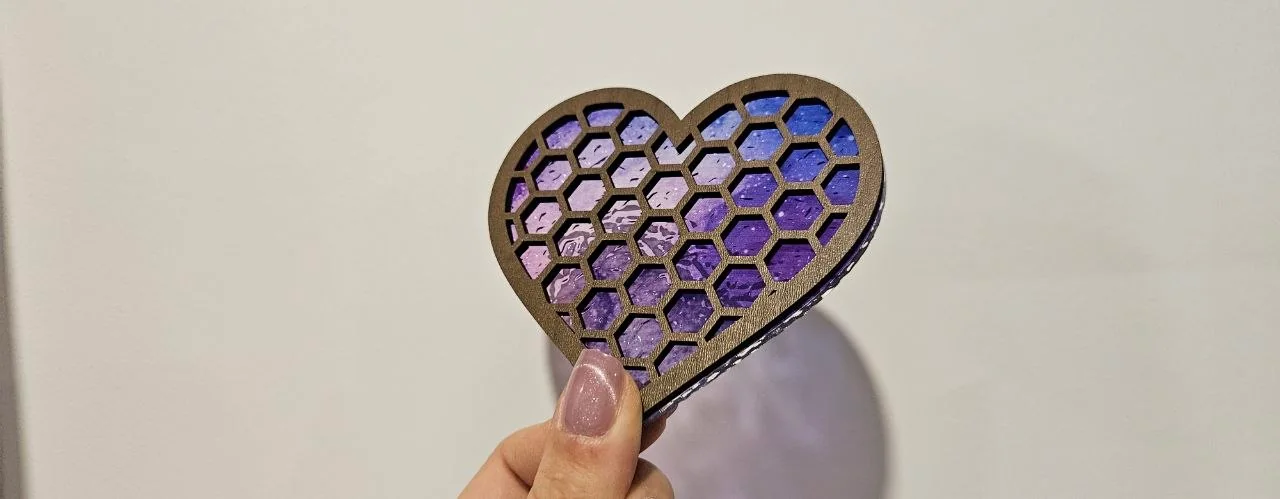
A layered piece is several flat cuts glued on top of each other to build depth: layered wall art, two-colour name signs, cake toppers, stacked maps. The cutting is quick; the result depends on stacking each layer in the right place.
This guide covers any layered project. For maps there is a dedicated guide to assembling layered map stacks.
On this page (7)
What you need
- The cut layers, labelled
- Glue suited to the material (see step 4)
- A square corner or a jig to push the layers against
- Clamps, weights or a stack of books
1. Know the stack order
The bottom layer is the backing: the largest, solid piece that holds everything. Each layer above it is smaller or more open, and the top layer carries the finest detail.
Mark the layer number on the back of each piece in pencil as it comes off the laser, and lay the pieces out in stack order before you glue. Layers of similar outline are easy to swap by mistake.
2. Score glue guides on each layer
A glue guide is a light score line on one layer that shows the outline of the layer that sits on top of it. You glue inside the line and place the next piece on it. The Layers / 3D tab of an Art Library piece adds glue guides to its layered laser files automatically, in their own score colour.
Set the glue guide layer to score at low power, just enough to see. A deep line shows on any part the next layer does not cover.
3. Align the layers
- Shared outline: when every layer has the same outer shape, as in framed wall art and stacked signs, push each one into a square corner or a jig cut from scrap with the same outline.
- Alignment holes: cut two small holes in the same place on every layer and push dowel pins or toothpicks through the stack. The 3D Print Dowel Pins Generator makes pins to any diameter.
- Glue guides: for loose parts, such as letters on a backing, place each piece on its scored outline.

4. Choose the glue
| Layers | Glue | Tip |
|---|---|---|
| Wood on wood | Wood glue (PVA) | Spread a thin layer and keep it away from edges; it squeezes out under pressure |
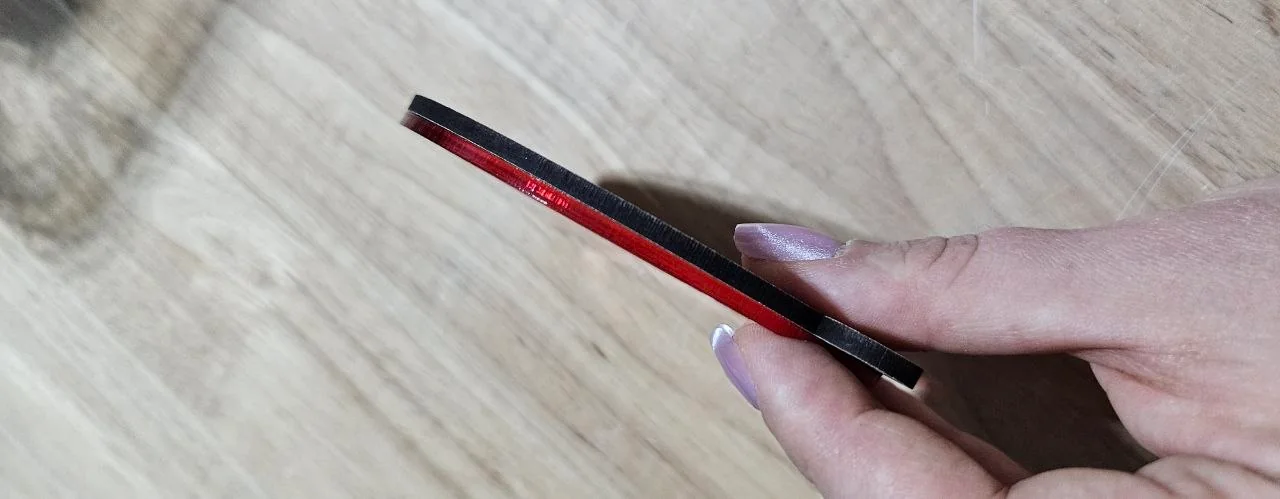
| Acrylic on acrylic | Acrylic cement (solvent) | Clear joints with no visible glue; apply with a needle bottle along the edge |
| Any sheet, no mess | Double-sided adhesive transfer sheets | Stick the sheet to the back of the material before cutting, so every piece comes out ready to peel and place |
| Acrylic on wood | Clear epoxy or adhesive sheets | Superglue can leave a white haze on acrylic |
| Paper and card | Glue stick, spray adhesive or foam pads | Foam pads add depth between paper layers |
5. Dry-fit, then glue from the bottom up
- Stack every layer without glue and check the order and the fit.
- Glue layer 2 onto the backing, then layer 3, and so on, aligning each one before the glue grabs.
- Press the stack flat under clamps or weights until the glue sets.
- Sand the outer edge if the layers are slightly off, then seal or paint.
Tools that make layered pieces
- Layered Wall Art Generator for framed multi-layer scenes
- Layered Lettering and Stacked Text for name signs
- Layered Cake Topper for toppers with a text layer on an outline layer
- The Layers / 3D tab on Art Library pieces, with glue guides
- The layered presets of the Map Designer
Next steps and project ideas
Common questions
What glue is best for layered laser cut wood?
Wood glue (PVA), spread thin and kept away from the edges. For a clean, fast alternative, stick double-sided adhesive sheets to the back of the plywood before cutting.
How do I align layers when gluing?
Push layers with the same outline into a square corner or a jig, push dowel pins through matching holes, or place loose parts on glue guides scored on the layer below.
What is a glue guide?
A light score line on a layer that shows where the next layer sits. Art Library layered files include them automatically.
Can I glue acrylic to wood?
Yes, with clear epoxy or double-sided adhesive sheets. Superglue can leave a white haze on acrylic.
Was this guide helpful?
More in Laser techniques
Keep up with MyLaserTools.
Email me about new tools, product updates, tutorials, and occasional MyLaserTools offers. Unsubscribe at any time.
© 2026 MyLaserTools.com. All rights reserved.