

Printing threaded rods with the 3D Print Threaded Pin Generator
Difficulty: easy. Time: 2 minutes to design, 15-60 minutes to print. Method: 3D printing only.
A threaded pin is a bolt without the head: all thread, end to end. That makes it the raw material for adjustable feet, knob shafts, double-ended studs, lead screws for casual mechanisms, and fit checks for printed nuts and threaded holes. Hardware stores sell threaded rod in meter lengths of a few sizes; this tool prints exactly the diameter and length you need.
Presets follow ISO-style metric proportions, so a pin generated at M8 threads into the nuts from the Machine Screws + Nuts Generator and into standard-pitch printed holes designed around the same sizes. The preset readout shows the active diameter and pitch at a glance.
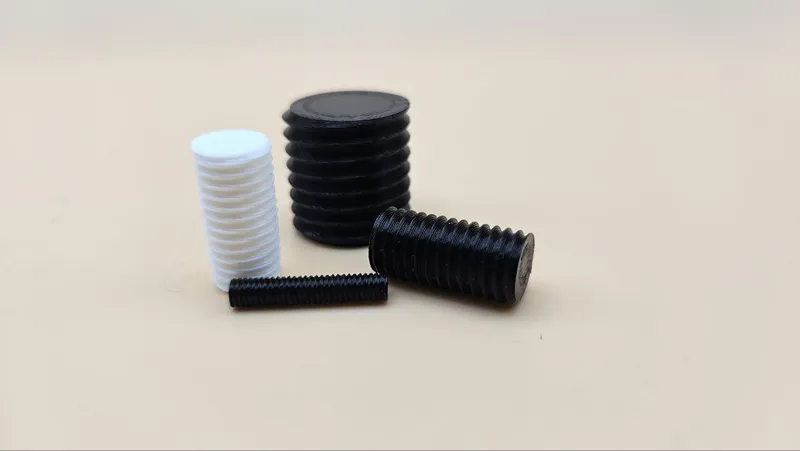
What You'll Need
- Any FDM 3D printer; tall pins benefit from a draft shield or slow speeds
- PETG for working studs, PLA for prototypes and adjusters
- A printed or metal nut in the matching size to verify the thread
Step 1 - Pick the thread
Open the tool and choose a metric preset; it sets the Thread Diameter and pitch together, and the info panel confirms both. M6 and up print reliably on a standard 0.4 mm nozzle; smaller threads are possible but fragile.
Step 2 - Set the length
Set Pin Length anywhere from 5 to 200 mm. You can also override Thread Diameter freely after picking a preset; the pitch scales with it, which is handy for matching an unusual existing part.
Step 3 - Export
Download STL or 3MF and slice; the pin exports upright, ready to print.
Choose Your Build Method
Print straight, usable threads
- Print vertically as exported. Fine layers (0.12-0.16 mm) keep the thread profile smooth.
- Tall thin pins wobble while printing: slow the speed, print two or three at once so the head moves between them, or add a brim.
- Use 4 perimeters or solid infill; a threaded rod is often loaded in bending.
- Chase the new pin through a nut a few times to burnish the thread before final use.
- Remember vertical prints are weakest across layer lines; for high-bending applications keep pins short and thick.
Make It Yours
- Adjustable leveling feet: threaded pin plus a printed knob foot for wobbly shop furniture.
- Double-ended studs joining two threaded holes where a bolt head cannot fit.
- A long M10 rod with two printed nuts becomes a quick clamping spreader for glue-ups.
- Knob shafts: embed the pin in a printed star knob for jig hardware.
- Thread gauges: print one pin per size as a go/no-go checker for tapped holes in prints.
- Slow-motion lead screw for a printed linear slider or camera focus rig.
- Combine with the Machine Screws + Nuts Generator and Washer Generator for an entirely printed fastener wall display.
New free tools, every month.
New laser cutting tools, what's coming next, and features we're building right now. Only MyLaserTools.com news. No spam, ever.
© 2026 MyLaserTools.com. All rights reserved.